
Renal mass + fine-needle aspirate
The clinical context
A 13-year-old indoor cat presented with progressive weight loss and poor grooming, despite a reasonable appetite. Examination identified a matted coat and a firm mass in the left caudodorsal abdomen.
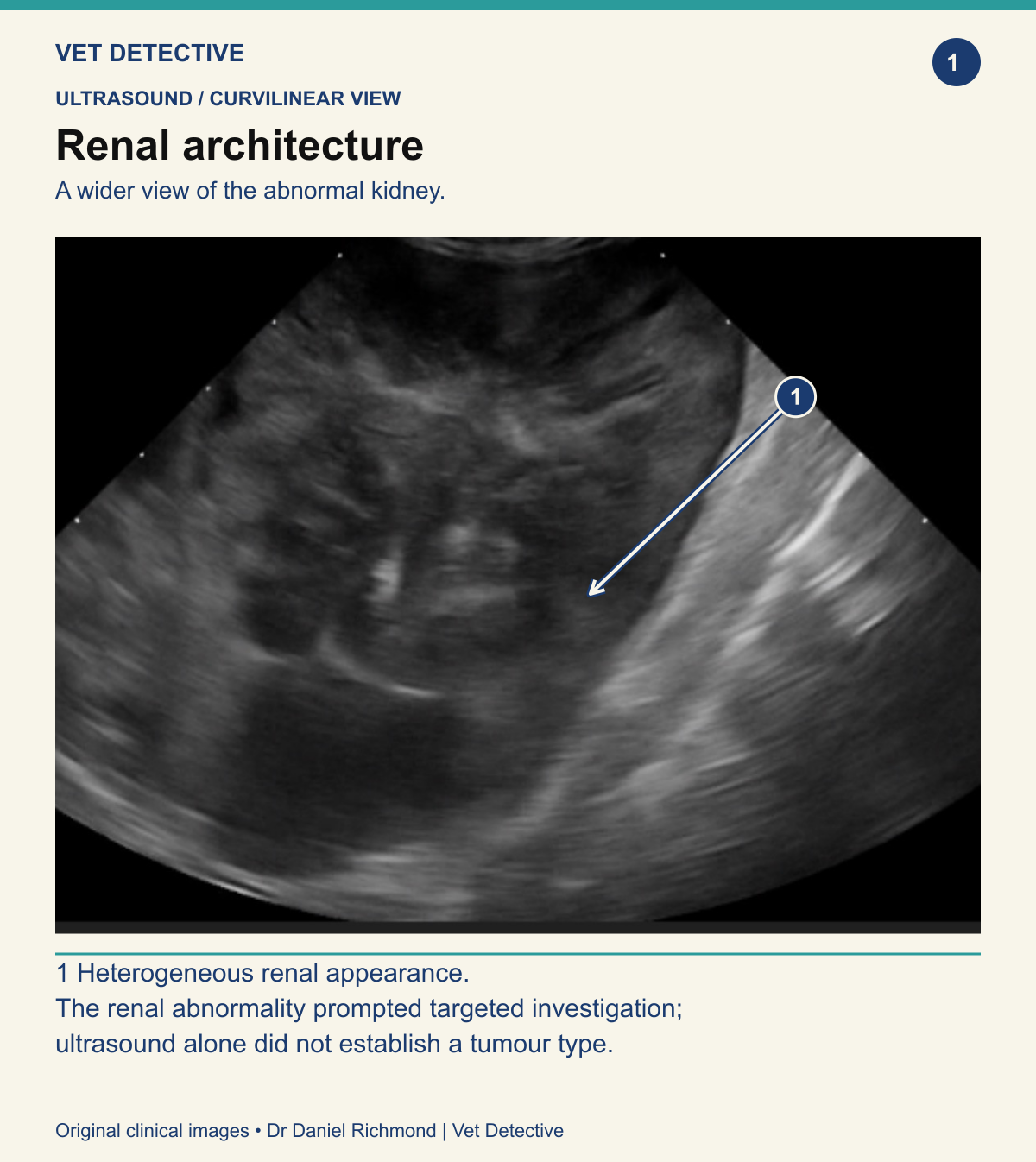
Bloodwork showed a mild SDMA elevation, mild hypokalaemia and a stress leukogram. These relatively modest changes did not explain the palpable abnormality and clinical deterioration, prompting abdominal ultrasound.
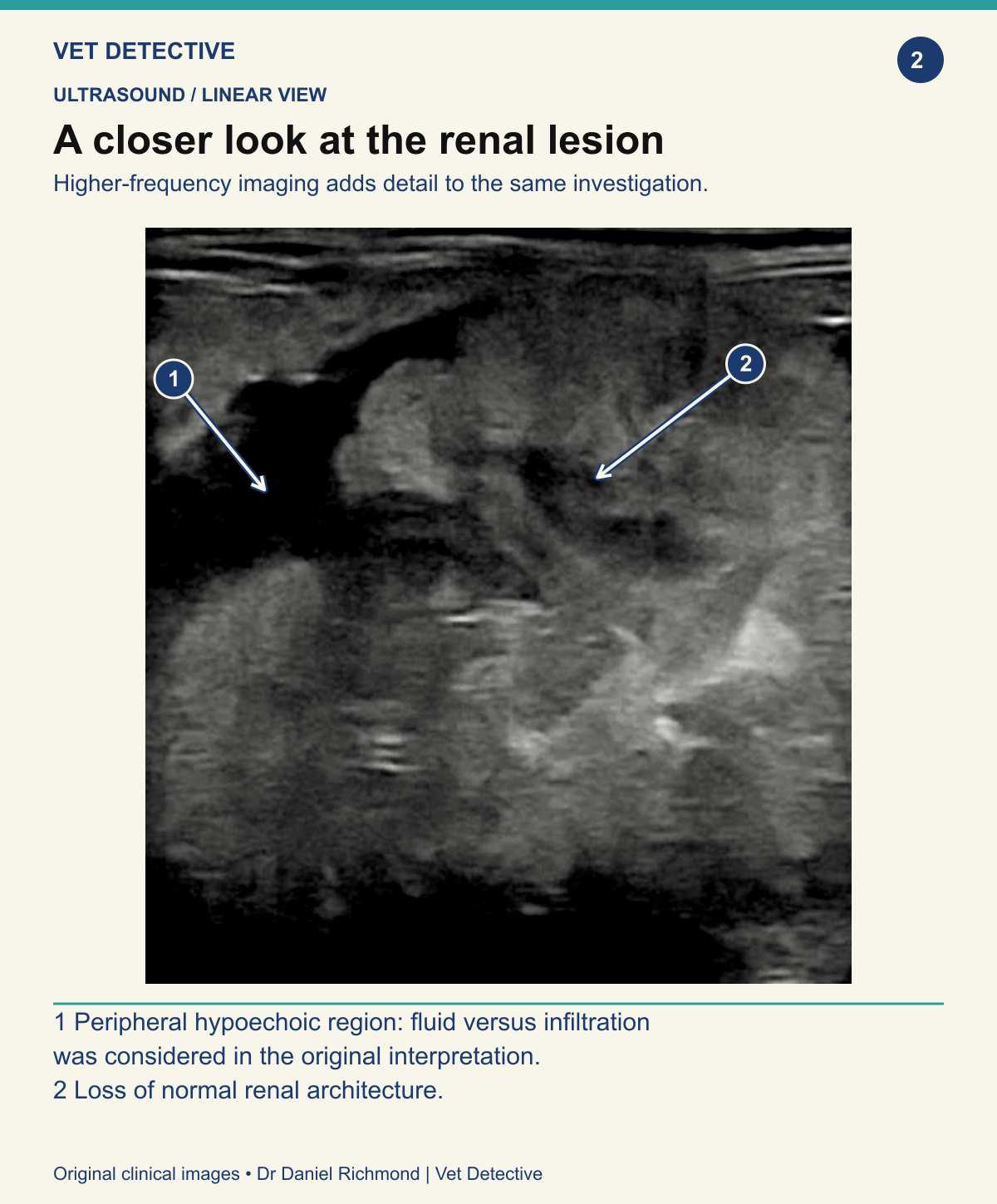
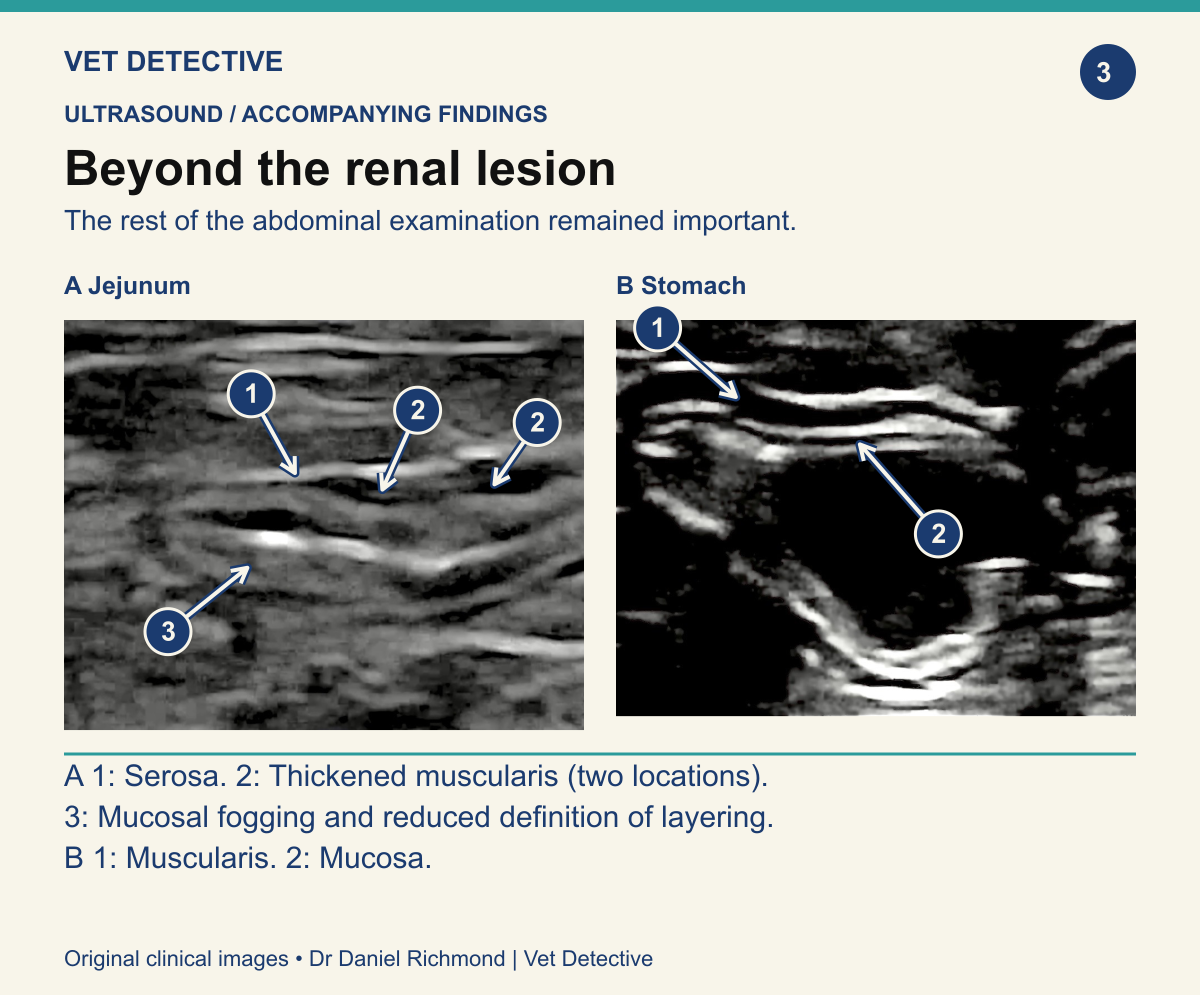
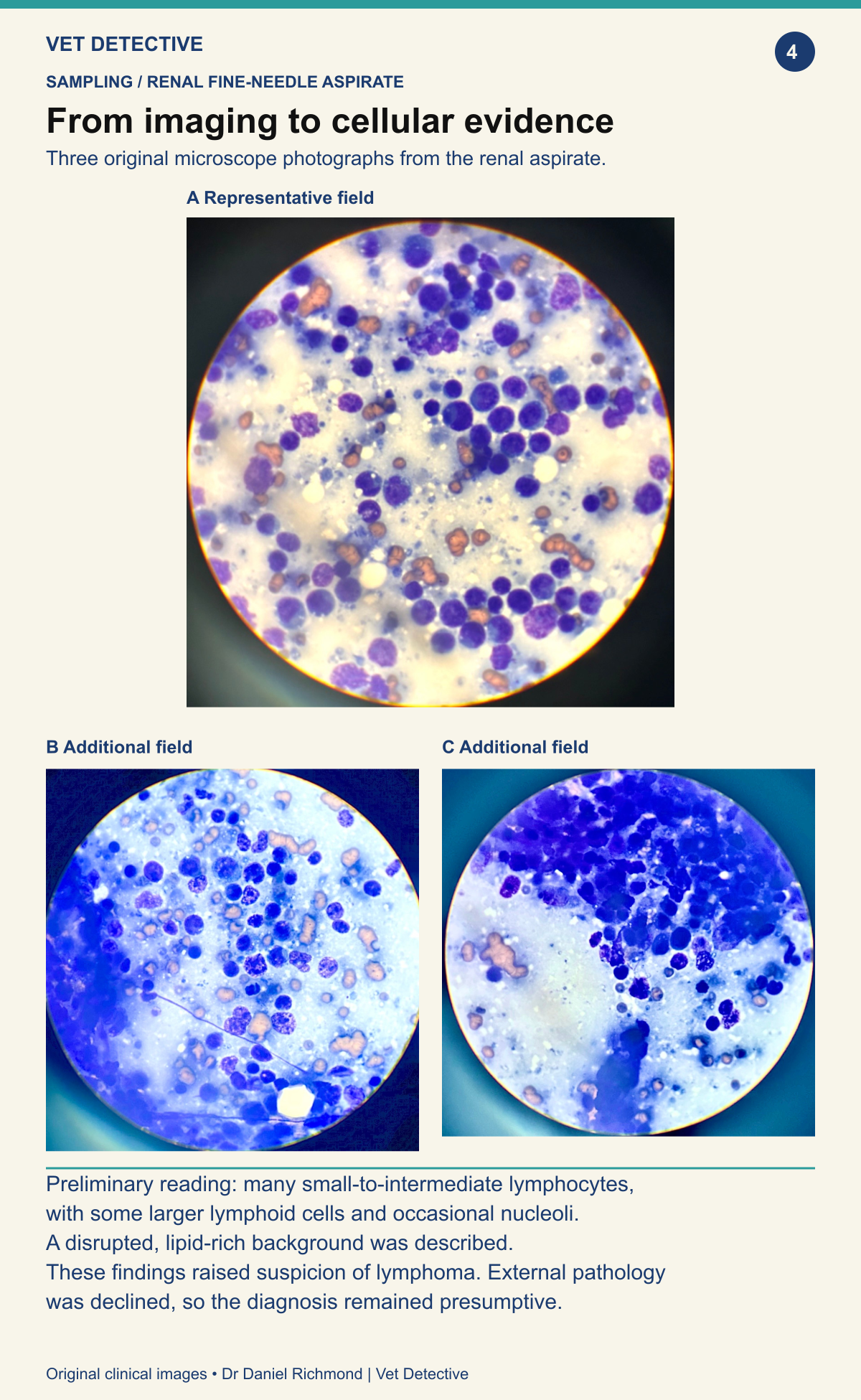
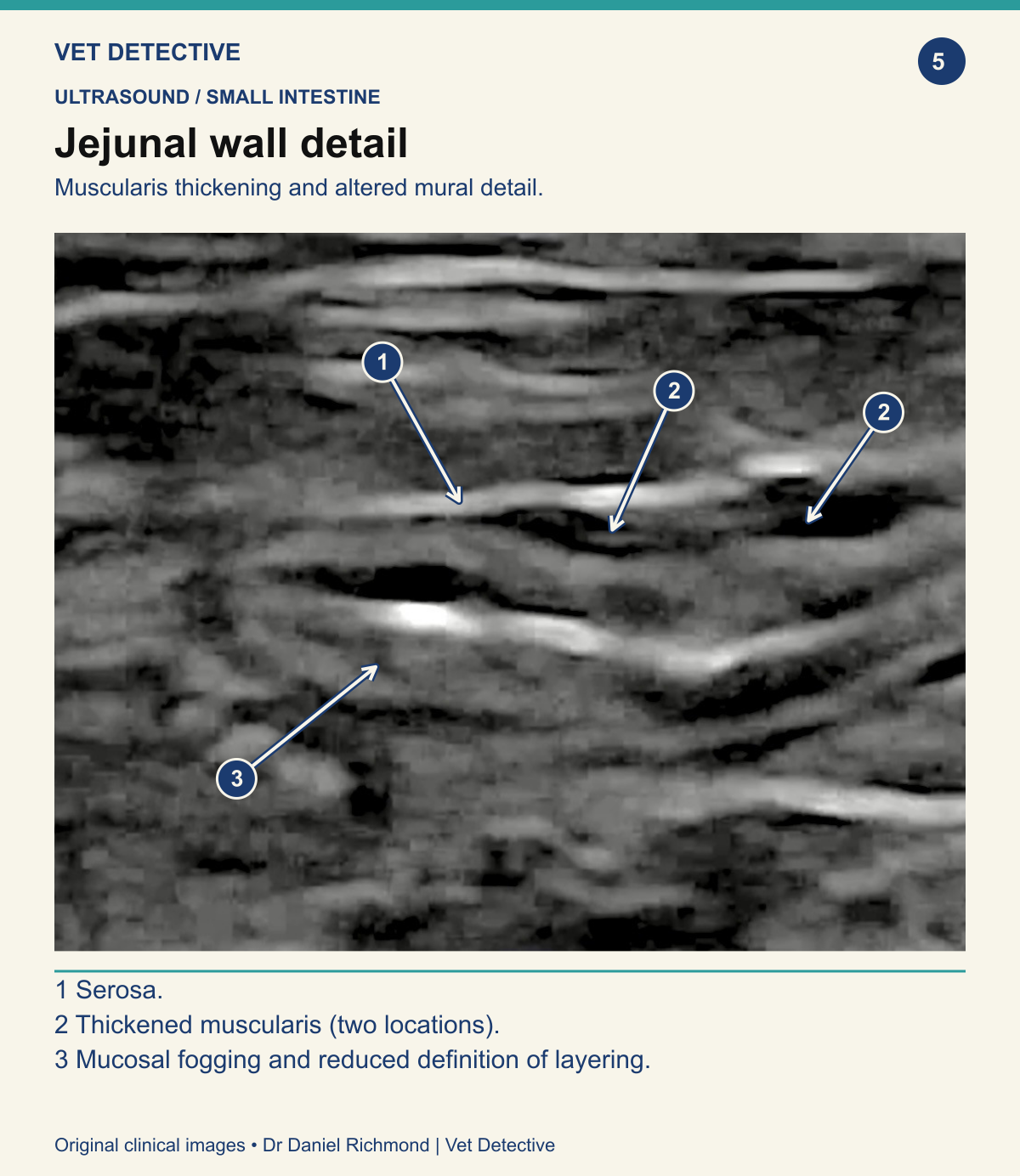
Imaging identified renal and gastrointestinal abnormalities. Targeted renal fine-needle aspiration added cellular evidence to the investigation. Preliminary in-house cytology raised suspicion of lymphoma, but external pathology was declined, so the diagnosis remained presumptive.
The ultrasound images were acquired using curvilinear and linear probes on an Esaote MyLab 6. Diagnostic images and useful ultrasound-guided samples can still be obtained with older equipment.
The decision and outcome
The owner elected palliative care and declined external pathology and further diagnostic testing, including PARR and flow cytometry. The cat was managed with prednisolone and supportive care, and had two comfortable weeks at home with the owner.
Euthanasia was subsequently elected on welfare grounds when quality of life declined. The investigation supported an informed decision about the next steps, while the suspected lymphoma remained unconfirmed.